
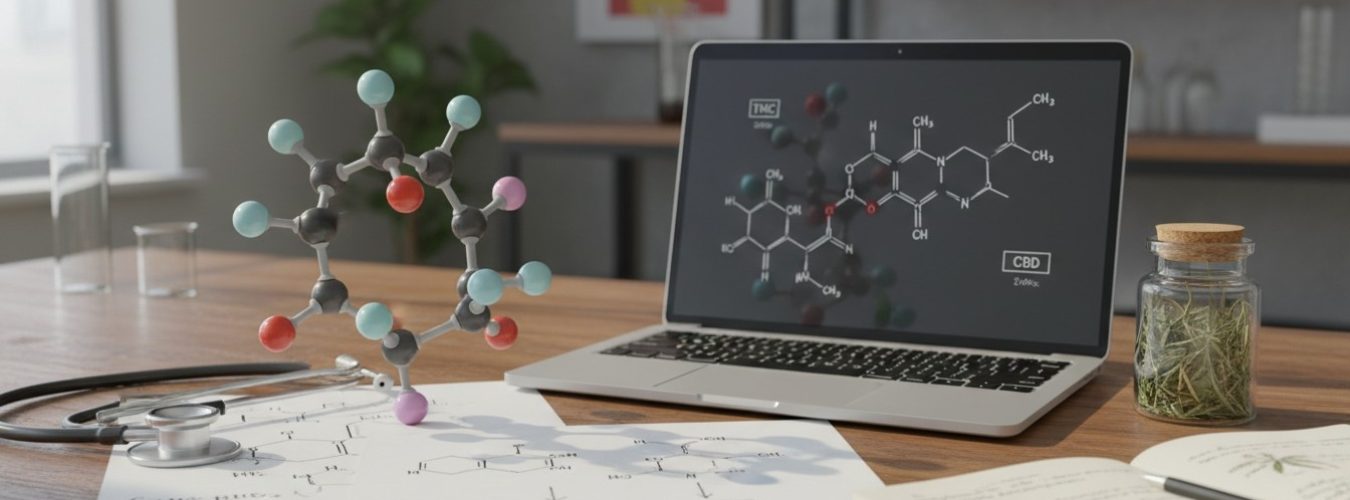
| Summary: Cannabis was first studied for its cannabinoids, which affect things like pain, mood, sleep, and appetite. CBD and other compounds may present health advantages without any psychoactive effects. But other than CBD, THC is the best cannabinoid that is both psychoactive and symptom-relieving. |
Introduction
Cannabis is one of the most all-pervasive plants on Earth. Approximately 50 million adults in the U.S. use cannabis at least occasionally, reflecting a shift from criminalization to broader medical and recreational acceptance. Learn more about the benefits and side effects of medical marijuana.
Interest in cannabis has grown because of its potential health benefits. Some want to know if it helps with sleep, pain, mood, appetite, and chronic conditions. Terms such as THC, CBD, and cannabinoids now find their place in some public health dialogues.
The article aims to bring forth a balanced and evidence-backed dialogue on cannabis and its compounds. By the end of the article, readers will be clear on the benefits and challenges and thus be capable of making informed decisions in cannabis use.
Let’s answer your question: Is cannabis marijuana?
What is Cannabis?
A. Origin and History
Cannabis has millions of years in the making, fashioning a long and diverse history. The ancient Chinese used cannabis for curing pain, digestive disturbances, and inflammation. In India, there was a repertoire of religious rites in Ayurveda to cure anxiety and diminish appetite.
The Middle East then disseminated cannabis, mainly for medicinal and recreational purposes. By the 19th century, Western medicine was familiar with the medicinal benefits of cannabis and started using cannabis extracts in the treatment of migraines, muscle spasms, and menstrual cramps.
The 20th century saw the advent of prohibition. Prohibition laws saw to it that cannabis was declared illegal in most parts of the world, thereby discouraging medicinal research. Recent decades have been resonating with legalization trends, thus resurrecting interest in cannabis for medical and wellness uses and to spur scientific research into its chemical compounds.
B. Cannabis Plant Types
If you’ve ever browsed a dispensary menu, you’ve likely heard the classic trio: sativa, indica, and hybrid. The differences aren’t as clear as they’re sometimes made out to be. But they do have sources in plant biology and classic use.
- Sativa plants produce tall plants with effects. People often describe it as stimulating or uplifting.
- Indica types are shorter, bushier, and traditionally linked to soothing, body-heavy sensations.
- Hybrids take elements from both and lead the market today.
These groups say only half of what needs to be said. The real effects of cannabis are based on the respective combination of chemicals within the plant.
C. Main Plant Components
Cannabis has hundreds of chemicals, but three levels are prominent.
- Cannabinoids such as THC and CBD act instantly on our biology.
- Terpenes deliver cannabis with its characteristic scent, citrus, pine, skunk, and can also impact what the experience feels like.
- Flavonoids, less well-known, are antioxidants that contribute both dye and possible therapeutic value.
It’s this mixture of combinations that makes cannabis so difficult and interesting.
What are Cannabinoids?
A. Definition & Categories
Central to cannabis’s results are cannabinoids, chemical compounds with three sources:
- Phytocannabinoids are discovered in the cannabis plant (THC, CBD, and many others).
- Endocannabinoids made by our own bodies, like anandamide, are commonly directed to as the “high molecule.”
- Synthetic cannabinoids, created in laboratories, are potentially medicines but can also be sometimes lethal street drugs.
B. The Endocannabinoid System (ECS)
Our body is programmed to react to cannabinoids via the endocannabinoid system. The system concerns receptors, CB1, with high attention in the brain and nervous system. At the same time, CB2 is found more in immune tissues. Learn how this works in our guide on the endocannabinoid system.
Imagine the ECS as a network of regulators, operating silently to maintain balance in mood, discomfort sensitivity, hunger, sleep, and even immunity. When we ingest cannabis, cannabinoids THC and CBD are inserted into this network, nearly as keys into locks. Changing the mechanisms by which those functions are executed.
Key Cannabinoids and Their Properties
A. THC (Tetrahydrocannabinol)
THC is the best-known cannabinoid. The one that makes the cannabis ‘high.’ Beyond getting individuals high, though, THC has long-proven medical services: decreasing nausea, boosting appetite, and helping certain conditions of pain. For a detailed guide on how medical marijuana can help manage these symptoms. Still, it’s not without risks. Some people have racing ideas, anxiety, or coordination issues. Too much THC can leave a newcomer feeling quite uneasy.
B. CBD (Cannabidiol)
CBD, on the other hand, doesn’t get you high. You can smoke it or take it and still be quite clear-headed. Its fame is built around anti-anxiety action, anti-inflammatory activity, and seizure decrease, especially in youth epilepsy syndromes. Discover more about using cannabis for depression and anxiety.
C. Other Cannabinoids Worth Mentioning
Cannabis science is advancing beyond THC and CBD.
- CBG is examined for antibacterial activity and for health in the gut.
- CBN occurs naturally as THC gets older and can cause sleep. For more insights on using medical marijuana for sleep, check this guide.
- CBC has shown potential in managing mood and protecting nerve cells.
These so-called “minor cannabinoids” could be significant players in the coming years.
Medical Uses of Cannabis and Cannabinoids
Cannabis itself is even federally unregulated in the U.S., but the FDA has approved several cannabinoid-derived medicines. Pure CBD medication, Epidiolex, is utilized to treat rare forms of seizure disorders. Marinol and Syndros, THC synthetics, are utilized to treat loss of hunger and chemotherapy-induced nausea. Cesamet, another synthetic, is also utilized to treat nausea.
Apart from medications, cannabis has been proven effective for a few conditions: chronic pain (especially nerve-related), nausea from chemotherapy, muscle spasticity from multiple sclerosis, and specific seizure disorders.
Patients always speak of progress outside the clinical evidence: insomnia relief, anxiety relief, or enhanced quality of life.
Are Cannabis and Cannabinoids Safe?
One of the most effective arguments for the popularity of cannabis is its safety profile. Used responsibly, it is much safer than drugs society already tolerates.
Unlike alcohol, cannabis is not associated with liver disease, violence, or the same long-term health costs.
That is not to say it’s secure. Some report stress and short-term memory issues. Extensive, repeated use might impact brain growth or driving, especially in young people. But for most adults, side effects are temporary and minor: dry mouth, red eyes, improved appetite.
Legal and Regulatory Landscape
Hemp, which contains less than 0.3% THC, is legal, which is why CBD is widely available. However, the laws vary by state. More than 35 states allow medical marijuana, and over 20 have legalized recreational use. But crossing a state line could make you a criminal for possessing the same substance.
Even in states where cannabis is legal, businesses can still enforce drug-free workplace policies. Travelers should also keep in mind that airports are under federal jurisdiction, so trying to bring cannabis through security can lead to serious trouble.
Guidelines for Safe and Responsible Use
For the adventurous who are trying cannabis, some procedures make the experience safer:
- Begin with low doses, especially if eating edibles, which may take several hours to take effect.
- Read labels carefully; potency matters. A 5 mg gummy won’t have the same effect as a 50 mg one.
- Never use cannabis in cross with alcohol or sedatives.
- Store products in childproof containers, out of reach of children and pets.
The Future of Cannabis and Cannabinoid Research
Ongoing research involving minor cannabinoids such as THCV and CBG, alongside the terpenes that might act synergistically for targeted therapeutic products, is being conducted. It is believed that the therapeutic benefits would be optimised through the use of personalised cannabis medicine based on genotype, metabolism, and condition-specific responses.
With differences in policies and slow legal approval, the scrutiny of the cannabis plant might be encouraged from a scientific point of view to allow safer and more effective cannabis therapeutic interventions for chronic, mental health, and well-being-related illnesses.
Conclusion
Cannabis and cannabinoids are very good for therapeutic and responsible uses. They can assist lower pain levels, cause sleep, reduce nausea, and uplift patients’ mental health in many forms where conventional medicine has failed. With this comes danger, and not all patients react similarly.
The magic lies in customized care, whether educated or not, ideally navigated by experts. Medical practices like ECS Wellness work with patients in a manner that depends on safety and evidence-based evaluation to determine if cannabis or cannabinoids are right for their medical plan.
Frequently Asked Questions
1. What truly distinguishes cannabis from hemp?
Hemp products with less than 0.3% THC are for general wellness, while cannabis with higher THC is used for medical and recreational purposes.
2. Is cannabis overdose plausible?
Though an overdose resulting in fatality is nearly impossible, consuming extremely high doses may lead to anxiety, lightheadedness, or temporary unease.
3. What is the duration cannabinoids remain in the human body?
A few days to several weeks, this depends on how often a person uses, their body fat ratio, and their metabolic speed.
4. Is CBD legal across all states?
While cannabidiol extracted from hemp is legal at the federal level, certain states continue to enforce limitations on its sale or use.
5. Can cannabis disrupt the functioning of prescription drugs?
Certainly, there is a noted interaction with sedatives, seizure drugs, and blood thinners. It is strongly recommended that you consult your physician before commencing its use.