

Summary: The Endocannabinoid System for Endometriosis Pain – ECS plays an important role in how the body regulates inflammation, immune responses, and pain signaling. Endometriosis is often driven by chronic inflammation and increased nerve sensitivity, which can lead to persistent pelvic pain, fatigue, and painful menstrual cycles. The endocannabinoid system helps maintain balance by moderating inflammatory activity and adjusting how pain is perceived throughout the nervous system. By supporting ECS function through lifestyle habits, nutrition, and in some cases cannabinoid-based therapies, women may find additional ways to manage symptoms and improve overall quality of life alongside conventional medical treatments.
Endocannabinoid System for Endometriosis Pain: How Your ECS Fights Pain Naturally
Endometriosis pain is often minimized as “just painful periods.” But for women with endometriosis, the experience is far more complex than menstrual cramps.
It can mean chronic pelvic pain that lingers beyond the menstrual cycle. Severe pain that disrupts work and relationships. Abdominal pain that feels unpredictable. Chronic fatigue that doesn’t improve with rest. Pain during sexual intercourse. Painful bowel movements. Heavy menstrual bleeding. Stomach pain that seems unrelated but returns month after month.
These are not isolated endo symptoms. They are common symptoms associated with endometriosis, a condition driven by chronic inflammation and immune imbalance.
Understanding how your ECS fights endometriosis pain naturally offers a different way to think about symptom relief. Instead of focusing only on suppression, we begin focusing on regulation.
Because your body already has a system designed to reduce inflammation and manage pain.
What Happens in the Body When Endometriosis Occurs
Endometriosis occurs when endometrial-like tissue grows outside the uterus. This misplaced endometrial tissue may attach to the ovaries, fallopian tubes, bowel, bladder, or other pelvic organs. These endometrial implants respond to hormonal fluctuations during the menstrual cycle just like uterine lining would. But outside the uterus, this tissue cannot shed properly.
The result is chronic inflammation, irritation, and often scar tissue formation. Over time, endometrial tissue growth can create adhesions that bind pelvic organs together. This contributes to chronic pelvic pain and increased pain sensitivity.
The pain associated with endometriosis is not only cyclical. Many women experience:
- Persistent pelvic pain
- Severe menstrual cramps
- Painful periods
- Abdominal pain
- Lower back pain
- Ovarian cysts
- Pain during sexual intercourse
- Pain during bowel movements
- Chronic fatigue
- PMS symptoms that feel intensified
These painful symptoms are often associated with endometriosis related pain pathways that involve both the immune and nervous systems.
This is why conventional treatments alone do not always fully alleviate pelvic pain.
Why Endometriosis Pain Becomes Chronic
Endometriosis associated pelvic pain is fueled by chronic inflammation.
When endometrial cells grow in areas they do not belong, the immune system responds. Inflammatory chemicals are released. Blood flow increases to the affected area. Over time, nerve fibers multiply around lesions. This contributes to increased pain sensitivity.
The nervous system can become hypersensitive, meaning pain signals are amplified. Even minor stimulation may feel intense. This is one reason chronic pelvic pain persists even between cycles.
Chronic pain develops when inflammatory signaling and nerve activation continue for long periods.
This is where the endocannabinoid system becomes essential.
The Endocannabinoid System For Endometriosis Pain Management
The endocannabinoid system is one of the body’s most important regulatory networks. It exists to maintain balance across multiple systems, including immune response, reproductive health, and nervous system signaling.
It is made up of:
- Endocannabinoids produced naturally by the body
- Cannabinoid receptors located throughout tissues
- Enzymes that regulate signaling
CB1 receptors influence pain perception in the brain and spinal cord.
CB2 receptors regulate immune activity and inflammation in peripheral tissues.
Together, they help manage pain, reduce inflammation, and prevent exaggerated immune responses.
When functioning optimally, the ECS helps reduce endometriosis symptoms by moderating inflammatory signaling and adjusting how pain is perceived.
In conditions associated with endometriosis, ECS signaling may become dysregulated. Supporting this system may help reduce pelvic pain naturally rather than simply masking it.
How Your ECS Fights Endometriosis Pain Naturally
There are several key ways the ECS works to reduce pain associated with endometriosis.
1. Helping Reduce Inflammation
Chronic inflammation drives endometriosis pain. CB2 receptors play a role in calming immune cell activity and reducing inflammatory compounds.
By supporting this pathway, the ECS helps reduce inflammation that contributes to endometrial tissue irritation and scar tissue formation.
2. Regulating Pelvic Pain Signals
CB1 receptors influence how pain signals are processed. Instead of eliminating sensation entirely, they adjust the intensity.
This modulation can help reduce severe pain during flare-ups and ease endometriosis symptoms during the menstrual cycle.
3. Addressing Increased Pain Sensitivity
Increased pain sensitivity is common in women with endometriosis. The ECS plays a role in regulating nerve excitability. Balanced signaling may help prevent pain pathways from remaining in a constant state of activation.
4. Supporting Hormonal Balance
While the ECS does not replace hormone therapy or hormonal therapies prescribed by physicians, it interacts closely with reproductive signaling pathways. Balanced ECS activity may help support efforts to balance hormones and manage symptoms more effectively.
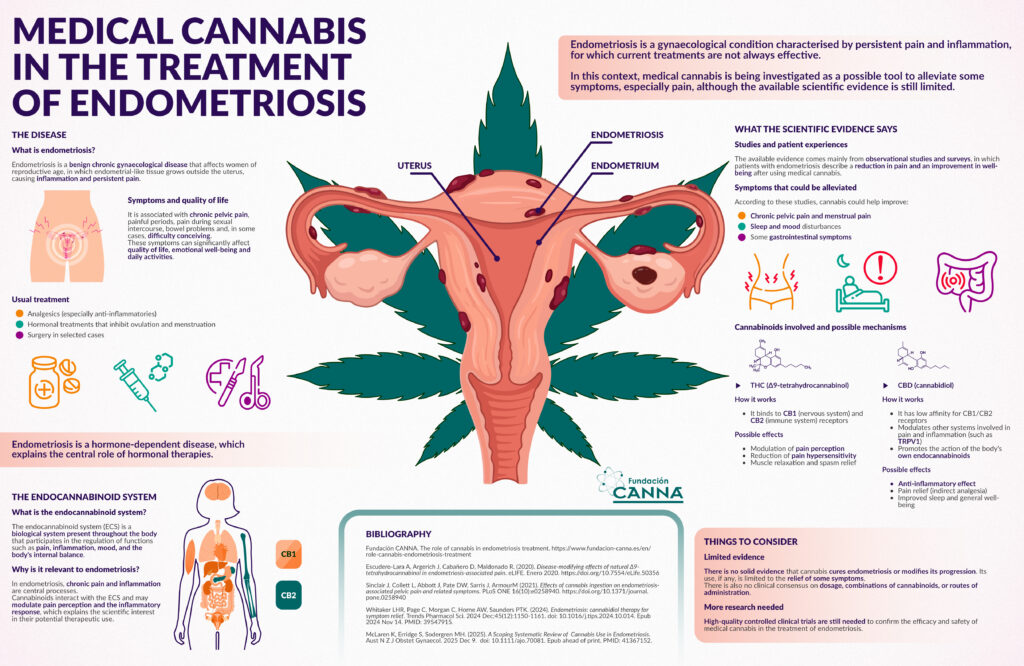
Cannabis as a Tool for Symptom Relief
Cannabis contains plant cannabinoids that interact with the ECS.
THC binds directly to CB1 and CB2 receptors. This interaction may help relieve pain, reduce pelvic pain, and provide short-term pain relief during acute episodes.
CBD works indirectly, supporting natural endocannabinoid levels. It has demonstrated anti-inflammatory properties in emerging research and may help reduce endometriosis pain without intoxicating effects.
For some women, combining cannabinoids thoughtfully may help manage pain and reduce symptoms when integrated with medical treatments.
Cannabis is not a replacement for conventional treatments such as hormone therapy or surgery. It can, however, be part of a broader pain management strategy.
Lifestyle Support for Reducing Endometriosis Symptoms
Supporting the ECS goes beyond cannabis.
An anti-inflammatory diet rich in anti-inflammatory foods may help reduce chronic inflammation. Omega 3 fatty acids are particularly important because they serve as building blocks for endocannabinoids.
Sources include:
- Fatty fish
- Fish oil supplements
- Flaxseeds
- Chia seeds
Omega 3 fatty acids and anti inflammatory supplements such as alpha lipoic acid may support immune balance. Dietary changes that prioritize whole foods and reduce processed ingredients may help reduce inflammation overall.
Some women explore traditional Chinese medicine or other natural remedies as complementary remedies for endometriosis. Physical therapy focused on pelvic muscles can help reduce pelvic pain and alleviate pelvic pain associated with muscle tension.
Heat therapy remains one of the simplest forms of symptom relief. A heating pad placed over the lower abdomen can help increase blood flow and relax pelvic muscles. Increasing blood flow may temporarily reduce pain and ease painful periods.
Small, consistent changes often have cumulative effects.
Treatment Options and Integrated Care
Medical treatments for endometriosis may include hormonal therapies, pain medication, surgery, or a combination of approaches.
Treatment options vary depending on symptom severity, reproductive goals, and risk factors.
While conventional treatments can reduce endometriosis related pain, they do not always eliminate chronic inflammation or fully restore quality of life.
An integrated approach that includes:
- Medical treatments
- Dietary changes
- Anti inflammatory diet principles
- Stress management
- ECS support
- Physical therapy
- Targeted supplementation
May offer more comprehensive support.
The goal is not simply to manage pain in isolation. It is to improve overall quality of life.
Supporting Reproductive Health Through Balance
Endometriosis affects reproductive health, but it is also a whole-body inflammatory condition. Chronic inflammation can worsen symptoms. Stress can exacerbate symptoms. Lack of sleep can increase pain sensitivity.
When the ECS is supported, it helps regulate stress hormones, immune signaling, and inflammatory responses. This systemic regulation may help ease endometriosis symptoms and reduce chronic pelvic pain over time.
Relief does not always mean eliminating every symptom. Sometimes it means reducing the intensity of severe pain. Sometimes it means shortening flare-ups. Sometimes it means improving energy and reducing chronic fatigue.
For women with endometriosis, even modest improvements can feel significant.
A Different Perspective on Endometriosis Pain
Endometriosis pain is real. It is inflammatory. It is immune-driven. It is neurological. It is hormonal.
And your body is not passive in the process.
Your endocannabinoid system is actively working to reduce inflammation, regulate blood flow, adjust nerve sensitivity, and manage pain.
Understanding how your ECS fights endometriosis pain naturally reframes the conversation. Instead of asking only how to suppress painful symptoms, we begin asking how to support the body’s regulatory systems.
This does not replace medical guidance. It enhances informed decision-making.
When education meets biology, options expand.
At ECS Wellness, we focus on balance, not extremes. The ECS sits at the intersection of inflammation, pain management, and reproductive health. Supporting it thoughtfully may help reduce endometriosis symptoms, alleviate pelvic pain, and improve quality of life.
Your body already contains mechanisms designed to restore equilibrium.
The question becomes how you choose to support them.

Meghan Zaklin, MSN, FNP-BC is a board-certified Family Nurse Practitioner and clinical leader specializing in integrative, whole-person healthcare with a focus on cannabinoid medicine, mind-body connection, and lifestyle-based interventions. She is the Co-Owner and Chief Quality and Safety Officer at ECS Wellness, a Massachusetts-based integrative medicine practice dedicated to evidence-based medical cannabis care and personalized wellness solutions.