
| Summary: ECS Wellness offers NIH-approved PROMs to track and record the health parameters and variations in the cannabis ecosystem, emphasizing patient needs. Measuring aspects like mood, pain, sleep, and daily function, these tools uniquely adjust medicine and lifestyle patterns. The result is care that feels safer, empowering, and effective. |
Healing is a process that never has two treatments that are the same for two people. Something that may be relieved for someone could be complex relief for someone else.
In integrative medicine, this means mixing treatments across multiple systems such as herbs, lifestyle, mind-body work, nutrition, or sometimes cannabis. It is about not simply addressing symptoms but looking at what helps healing, what strengthens resilience, and what helps balance.
ECS Wellness believes every patient walks a different path. We offer customized cannabis therapy integrated with lifestyle medicine and mind-body approaches to rebalance the system we call the Endocannabinoid-System, or ECS. The model does not just put you on the plan but walks alongside you in measuring, adjusting, and responding. Patient-Reported Outcome Measures or PROMs are among the most powerful tools in guiding this process. They are structured questionnaires that you fill out yourself:
- detailing how you feel
- how well you are functioning
- how does your quality of life change
Why PROMs? Because they provide a single space for your voice to be heard. They let you see the progress. Depending on the PROM, they let you and your provider know what is working, what is not, or what must be modified. Hence, scoring progress provides for control, clarity, and confidence. It means you are not left in the dark. And when you are adequately informed and supported, you heal better, feel better, and stay better.
Understanding Patient-Reported Outcome Measures
Well-thought-out questions like:
- “How anxious have you felt over the past week?”
- “How well did you sleep?”
- “How much did pain interfere with your day-to-day assignments?”
These are not judgmental questions; they are simply your feedback, your lived experience. That is what PROMs are: self-reporting instruments wherein one reports symptoms, emotions, physical states, sleep, or pain; mood, cognitive clarity, stress, and quality of life. PROMs tell you what treatment is doing to you rather than what a third person thinks it should do. It could be that the tests or observations are missing those minute changes in mood, small gains in energy, and alterations in sleep. No matter if they are positive or negative, the promotion of negative changes might be a hint to switch gears somewhere.
Why PROMs Matter
Change is Not Necessarily Surprising
Healing can sometimes be incremental; one night you might say to yourself, “Tonight I slept better than last night.” Or perhaps it is in the afternoon that the silent calm charges in: “I felt a little calmer in the afternoon.” PROMs help track these micro-shifts.
Highlighting What’s Working and What Needs Adjustment
If a specific cannabis product (say, a particular CBD:THC ratio) is not assisting anxiety or worsening sleep, that would mean we might have to change dosage, timing, or ratio. PROMs indicate the sites where the treatment works and where it does not.
Encouraging Patient Engagement
Engaging in PROMs regularly thus makes you part of the procedure, not just a spectator. You get to visualize your own dataset.
- How was your night’s rest?
- What about your pain or mood during the day?
More often than not, this kind of awareness nudges patients into owning their healing: making choices regarding lifestyle, sleep hygiene, diet, mindfulness, and movement. In turn, it fortifies all these habits that might otherwise flounder.
NIH-Endorsed PROMs
If a PROM is named an NIH-endorsed one, it has undergone rigorous validation, consisting of reliability, consistency, and sensitivity to change. Integrative study providers mostly use these measures in research and clinical trials. This guarantees that what you’re measuring is meaningful, exact, and can be tracked over time.
NIH PROMs have been tested among different populations and in different conditions, and very often, there is normative data that assists providers in putting their results in context.
Mental Health & Cannabis Interface
Why are PROMs particularly relevant in cannabis care?
- Anxiety & Depression: Many come for cannabis therapy hoping to be treated for either anxiety or depression. PROMs allow us to measure those symptoms, whatever their intensity and frequency.
- Sleep Quality: Cannabis seems to modify sleep patterns in some way; tracking initiation, awakenings, and restfulness counts.
- Stress Levels: Subjective feelings of stress and their interference with daily needs.
- Pain Levels: The facets of mood, sleep, and activities that pain may affect.
- Cognitive Ability: Alterations in focus, clarity, and memory.
- Daily Function & Quality of Life: Beyond symptoms, these refer to work, social interaction, relaxation, and extracurricular activities.
ECS Wellness’s Approach to Personalized Cannabis Care
Holistic Integration
Cannabis cannot be considered a single tool; it’s embedded in a much broader healing weave. We combine it with lifestyle changes like:
- nutrition
- sleep hygiene
- movement
- stress management
- mind-body practices including meditation, breathwork, or yoga, and nutrition or environment changes, if and when applicable.
PROMs guide everything in this array. If your PROM answers insinuate that your sleep is still rather fragmented, we may emphasize sleep hygiene or certain cannabinoids that promote fragmented restoration.
Tailored Protocols
Each individual possesses unique endocannabinoid systems, physiology, backgrounds, sensitivities, and goals. One must personalize a protocol:
- Dosage: How much cannabis is being given; start low, if at all.
- Cannabinoid balance: Decide on the ratio best suited to the condition.
- Timing: Take the dose at a particular time of day, either in the morning or evening, before or after mealtime, and maybe around stress triggers.
The PROMs help keep the protocol dynamic. Conversely, say the anxiety PROMs are still very high and the sleep PROMs are showing little progression. In that case, changes can happen to assessments of cannabinoid ratios, timing, or possibly bring in other interventions like mindfulness or CBT.
Monitoring Safety & Effectiveness
Cannabis is powerful. Used well, cannabis is beneficial to people. Used poorly, it leads to side effects, overuse, or interactions. PROMs, or patient-reported outcome measures, help us keep track of the risk:
- Are there signs of overuse (e.g., fatigue, mood shifts, cognitive fog)?
- Are there side effects?
- Is the patient getting an improvement in domains they would like to see improved?
- Are there any side effects that are not wanted?
Every step of treatment is measured, never assumed, and adjusted accordingly.
Step-by-Step Tracking Process
The real walk-through of progress tracking is in ECS Wellness.
Initial Assessment
When you come in, you fill out a baseline set of PROM questionnaires aimed at multiple domains to establish a “before” snapshot. These have:
- Has the mood been consistent?
- Periods of depression or irritability?
- Where does it hurt, how much, and when is the worst time?
- Sleep duration, how restful, how often awakening, and sleep latency.
- Memory, concentration, feeling foggy or sharp.
- How much stress you perceive, how well you cope, and how symptoms interfere with your capability to engage in daily tasks, work, and relationships.
This gives you and your provider a baseline- the yardstick against which all changes will be measured.
Creating a Personalized Plan
Once those baseline results are available, the ECS Wellness team (which might comprise doctors, integrative medicine specialists, and/or sometimes mental health specialists) will review them with you. Together, priorities are established: it may be sleep; it could be pain; maybe anxiety is the top concern. Once the priorities are clear, we then prepare a plan that may include:
- Cannabis protocol: specific cannabinoid fractions, dose, schedule
- Lifestyle interventions: dietary adjustments, exercise, stress management, hygiene
- Mind-body therapies: meditation, breathwork, yoga, journaling
- Supportive therapies: as needed (therapy, physical therapy, nutritional guidance)
This plan is based on your PROM feedback, so what we choose is tied to your goals and what your body tells us.
Ongoing Monitoring
Healing is a dynamic process. After establishing your plan, follow-up PROMs are administered at regular intervals, whether weekly, once every two weeks, or once a month, depending on where you are in your healing journey. In the early stages of treatment, there are more regular check-ins and fewer, but equally consistent, ones once stabilized.
This lets us look for patterns:
- Are you improving, worsening, or remaining constant?
- Are the symptoms acting up or down during a particular time of day?
- Is the sleep fragmentation beginning to set in again?
- Have any side effects started popping up?
- Are we to urge for greater emphasis on one intervention or less?
Iterative Adjustments
Depending on what your PROMs reveal:
- Cannabis dose and/or timing can be shifted: higher or lower doses, change the ratio, restructure when you take it.
- Lifestyle or mindfulness interventions can be shifted: more stress management, better sleep hygiene, dead-on nutrition, or even more bodywork.
- Mind-body work can be stepped up, or altered: i.e., if meditation doesn’t really cut it, maybe movement or breathwork will.
It’s not trial-and-error without direction; it’s data-informed, led by you, responsive. You are a part of every decision made.
Benefits of PROM-Driven Cannabis Care
Using PROMs is not really about ticking the boxes; they create an aftereffect of benefits, some will come immediately into your mind, whereas many effects unfold over time.
- Patient Power: One tracks his/her own progress, sees his/her data, or may be involved in taking active-care decisions. That sense of agency engenders trust, engagement, and commitment.
- Data-Driven Precision: Programs rely not on treatment averages but on your individualized outcome feedback. Thereby refining dose, cannabinoid mix, timing, and lifestyle support.
- Comprehensive Insight: PROMs explain the 2-way interaction of physical-health domains against mental factors: how anxiety corrodes sleep or how pain wears down focus, and the effects on complete wellness.
- Enhanced Outcomes: Patients speak about being calmer, having better sleep, less pain, and an enhanced ability to do day-to-day things. Because your input guides the plan, all changes are sustainable.
- Better Communication: PROMs form a common language that turns vague impressions into straightforward and measurable insights, strengthening the relationship between you and the service provider.
Integrating PROMs into Daily Life
If PROMs are truly to be of assistance, they must be easy and integrated into life, not a problem.
- Digital Tools & Apps: ECS Wellness uses secure platforms so you can log your responses from your phone or computer. It’s private, speedy, and lets you track your progress with reminders and straightforward visual trends.
- Reflection & Journaling: Types of data are one thing; journaling is another. Writing down triggers, dreams, or mood changes elucidates the “why” behind your scores.
- Lifestyle & Mind-Body Energy: PROMs also show how the impact of meditation, breathwork, or nutrition changes is affecting you. When they note improvements, it helps to keep one consistent; problem points point to changes that need to be made.
The PROMs, journaling, and daily practices support each other, forming an endless loop of awareness and growth.
Moving Forward with Confidence
Healing is not a linear process. There will be days that seem like one step backward and others that leap forward. What keeps resilience in the healing journey is having a compass that allows you to know where you are, from where you came, and where you are going. Further adjustments need to be made. For us at ECS Wellness, those PROMs, endorsed by the NIH, serve as our compass.
By way of PROMs, we stay measurementally aligned with what matters most: you, your experience, your goals. Your voice is central and not an afterthought. With cannabis therapy buoyed by evidence, lifestyle medicine to stimulate your vitality, and mind-body care to heal your spirit, you stand a better chance of actualizing and sustaining well-being and mental health harmony.
We don’t just plan together; the journey is tracked, heard, and changed mutually with you.
FAQs
What are PROMs, and how are they used in cannabis care?
You complete questionnaires to describe how you feel, i.e., symptoms, mood, sleep, pain, stress, focus, and daily life. PROMs for cannabis care show if treatment is successful or needs adjustment, thereby helping to keep your experience central.
How often should I be completing them?
During the early phases of care, weekly or biweekly check-ins allow one to detect trends faster. These can later be changed to monthly assessments once things stabilize. But the key is consistency.
Will the results change my cannabis therapy?
Indeed. PROMs instruct adjustments in dosage, cannabinoid ratios (CBD vs THC), timing, or schedule. The plan is revised if sleep worsens or there is no improvement in mood.
Can PROMs track both mental and physical health?
Yes, indeed! They record both sides, representing things such as anxiety, stress, and mood (mental) alongside pain, sleep, and energy (physical), offering a holistic perspective on progress.
Is the information kept secure?
Yes. ECS Wellness utilizes HIPAA-compliant digital systems. Only your care providers can access your data, keeping it confidential and belonging only to you.
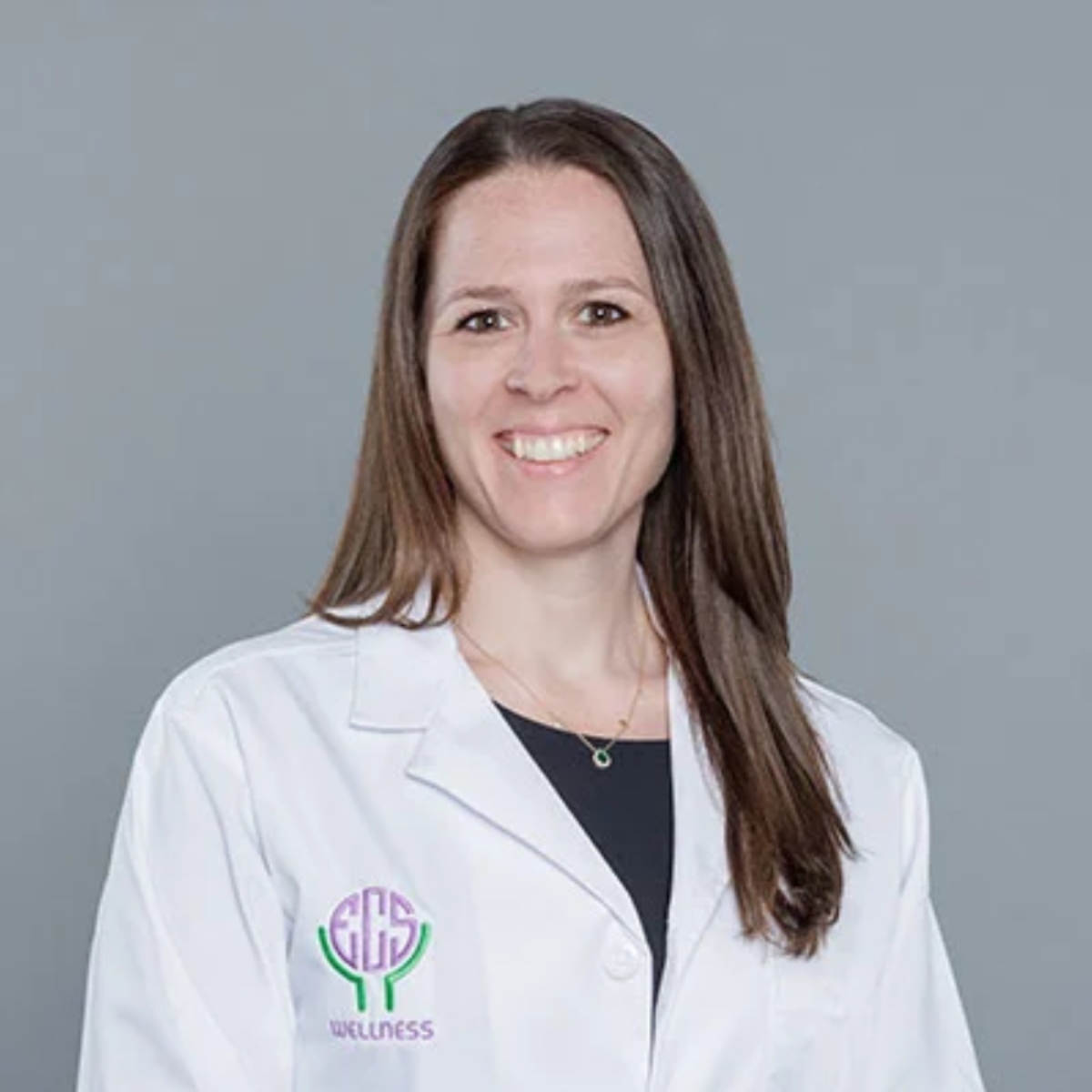
Meghan Zaklin, MSN, FNP-BC is a board-certified Family Nurse Practitioner and clinical leader specializing in integrative, whole-person healthcare with a focus on cannabinoid medicine, mind-body connection, and lifestyle-based interventions. She is the Co-Owner and Chief Quality and Safety Officer at ECS Wellness, a Massachusetts-based integrative medicine practice dedicated to evidence-based medical cannabis care and personalized wellness solutions.